
Production & Workflow
FL Studio Daily Challenges That Build Skill
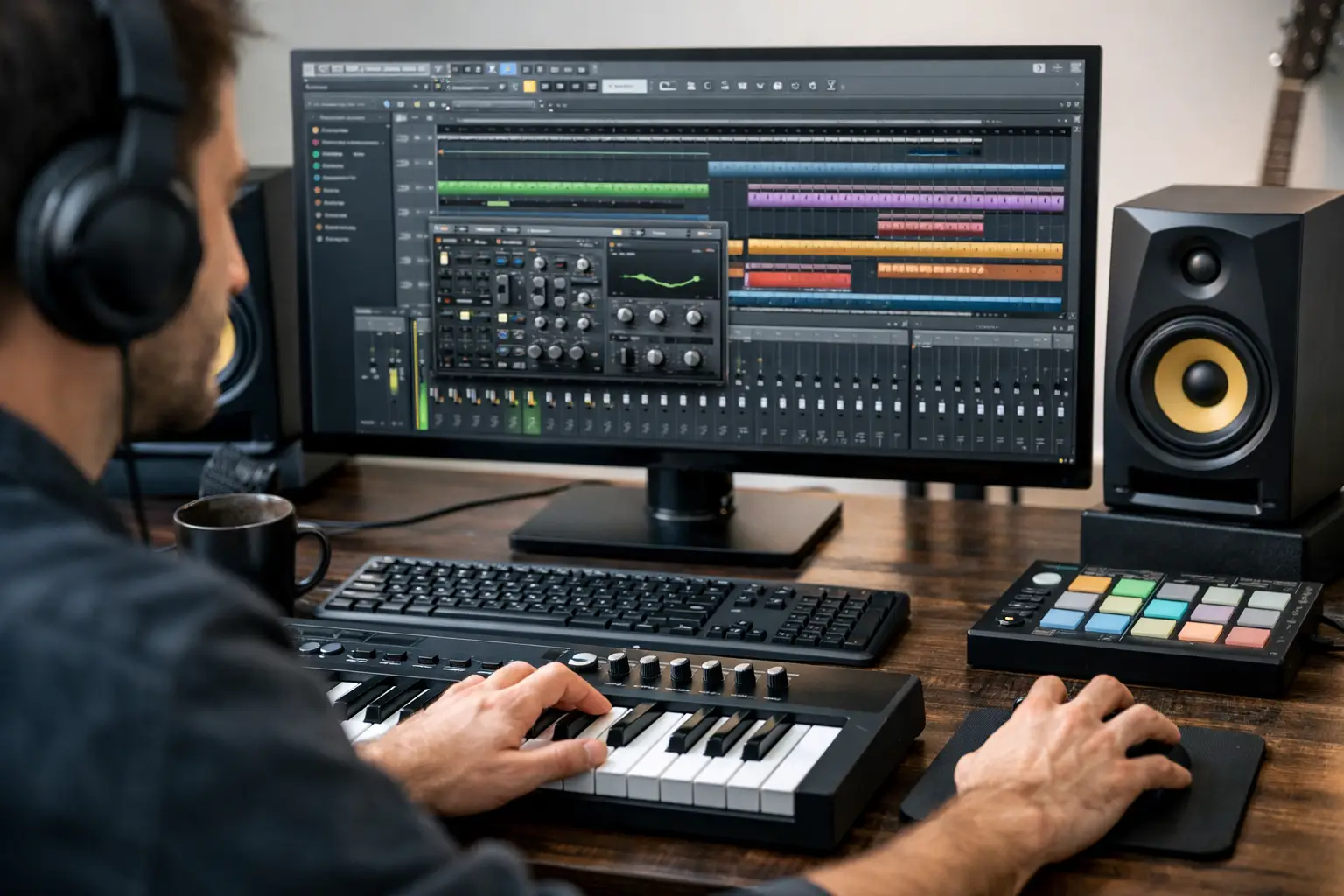
You open FL Studio, load a template, scroll through sounds for 20 minutes, and somehow end the session with less momentum than when you started. That is exactly why fl studio daily challenges work so well. They give your session a clear quest, a finish line, and a reason to ship something before your brain wanders off into plugin dungeon mode.
For beginner and intermediate producers, the real enemy usually is not lack of information. It is inconsistency. You already know there are a thousand tutorials on drums, melodies, mixing, and sound design. The problem is that watching more videos does not always level up your hands. Daily challenges do, because they force contact with the DAW itself.
Why FL Studio daily challenges work better than random practice
A good challenge is small enough to finish and specific enough to measure. That sounds simple, but it changes everything. Instead of saying, "I should get better at FL Studio," you say, "Today I will build a drum pattern using only stock drums and one swing setting." Now the mission is concrete.
That matters because music production has a weird habit of making productive procrastination feel like progress. Reorganizing sample folders, auditioning 80 presets, tweaking the same snare transient for 15 minutes - all of that can feel serious while secretly avoiding the hard part, which is making decisions. Daily challenges cut through that fog. They reduce option overload and turn practice into repetition with purpose.
There is also a retention advantage. If you do one focused exercise every day inside the same environment, FL Studio starts feeling less like a giant control panel and more like familiar terrain. Short repeated reps train recall. You stop asking, "Where is that tool again?" and start moving faster without thinking about it.
The best kind of FL Studio daily challenges
Not every challenge is worth your time. Some are too vague, some are too big, and some are basically mini songs disguised as practice. The sweet spot is a task you can finish in 10 to 30 minutes with one main skill target.
A strong challenge usually has three parts. First, it gives you a narrow rule. Second, it creates a visible result. Third, it is easy to repeat with a variation tomorrow. That loop is where progress starts stacking.
For FL Studio, the most effective daily challenges usually fall into a few lanes: beat-making, melody writing, sound design, arrangement, ear training, and mixing. You do not need to hit all of them every day. In fact, that can become its own form of chaos. It is usually better to rotate by focus so your practice has structure.
Beat challenges
Beat challenges are perfect if you freeze when starting from a blank playlist. Try building an 8-bar drum loop with only kick, snare, hi-hat, and percussion. Or make three different grooves at the same BPM using the same sounds. The goal is not to make your best beat ever. The goal is to improve timing, bounce, and decision speed.
FL Studio is especially good for this because the step sequencer invites quick repetition. That makes it easy to compare patterns, test swing, and hear how tiny rhythm changes affect the pocket. One challenge can teach more than a long theory video if you actually finish it.
Melody and harmony challenges
A lot of producers avoid melody work because it feels slower and more exposed. That is exactly why it belongs in your daily rotation. Try writing a four-bar melody using only five notes, or build chords in one scale and then flip the top note for variation. Constraints make the task less intimidating.
Piano roll work gets smoother when you repeat these drills. You start seeing intervals, note lengths, and rhythmic phrasing more clearly. Over time, melody stops feeling like random note placement and starts feeling like controlled movement.
Sound design and plugin challenges
If you live inside presets, daily challenges can help you build your own toolkit. Create one bass patch from scratch using FL Studio stock tools. Build a pad using only basic waveforms. Design a lead, then make three versions by changing envelope settings and effects.
This is where trade-offs show up. Deep sound design sessions can be rewarding, but they can also eat your whole day. So keep the mission tight. One sound, one purpose, one export. That way you train your ears without disappearing into a knob-twisting side quest.
Arrangement and finishing challenges
A lot of producers are great at loops and terrible at endings. Arrangement challenges help you cross that bridge. Take yesterday's 8-bar idea and turn it into a 1-minute sketch with an intro, drop, and outro. Or duplicate a loop and force yourself to add variation every 8 bars.
This type of practice is underrated because it feels less glamorous than making a fresh idea. But finishing is a real skill. If your hard drive is full of loop skeletons, arrangement challenges are one of the fastest ways to escape that graveyard.
How to build a daily challenge system you will actually keep
The biggest mistake is making your challenge plan too heroic. If your schedule says you are going to do 90 minutes of intense FL Studio training every single day, your streak is probably already in danger. Consistency likes friction-free systems.
Start with a minimum viable quest. Give yourself 15 minutes and one objective. If you go longer, great. If not, you still banked a win. That small success matters because daily practice is as much about identity as output. You are proving to yourself that you are the kind of producer who shows up.
It also helps to assign themes to certain days. Monday can be drums, Tuesday can be melody, Wednesday can be mixing, and so on. You do not need a rigid academy schedule, but some rhythm reduces decision fatigue. When you already know the mission category, getting started takes less energy.
Tracking matters too. Keep a simple log of what you did, how long it took, and what felt hard. This is your XP trail. Without it, progress can feel invisible even when it is real. With it, you start noticing patterns like weak transitions, muddy low end, or recurring rhythm issues.
What FL Studio daily challenges should not become
There is a trap hiding inside any skill grind: turning practice into content farming or achievement collecting with no real reflection. If you are cranking out daily tasks but never listening back, refining mistakes, or raising difficulty, you are grinding levels against the wrong enemy.
Another trap is designing challenges that are so artificial they stop connecting to real music. Practicing isolated tasks is useful, but eventually those reps need to feed actual songs. A drum challenge should improve your beat starts. A mixing challenge should help your works in progress sound clearer. If practice and creation never meet, motivation drops.
This is why a blended approach works best. Some days should be pure drills. Other days should use those drills inside a real sketch. Skill-building and song-building are not rivals. They are party members. You need both.
Where guided systems beat doing it alone
You can absolutely invent your own fl studio daily challenges. Plenty of producers do. But self-designed practice has one major weakness: it depends on you knowing what to practice next. Beginners especially tend to repeat what feels fun and avoid what would help most.
That is where a structured platform can change the game. Instead of guessing your next quest, you get targeted tasks, progression, and feedback loops that keep you moving across the map. SoundSurf leans into that on purpose - daily challenges, skill paths, quizzes, and achievement-style progression give producers a reason to keep showing up even when motivation is shaky.
That kind of system is useful because music production is not just about inspiration. It is also about reps, recall, and momentum. A guided challenge can do something random YouTube hopping rarely does: make sure today's practice actually connects to tomorrow's improvement.
A simple 7-day challenge arc to try
If you want to test this approach, keep it light for one week. Day one, make a drum loop in under 20 minutes. Day two, write a melody over it using one scale. Day three, design one custom bass. Day four, arrange the idea into a 60-second draft. Day five, mix only levels, panning, and EQ. Day six, rebuild the main section with one major variation. Day seven, export it and write down what improved and what still feels like a boss battle.
That week will teach you something valuable. Not whether you made a perfect track, but where your actual bottlenecks live inside FL Studio. Once you know that, your next set of challenges gets sharper.
The fastest way to get better in FL Studio is not waiting for a giant burst of inspiration. It is stacking small wins until your hands, ears, and instincts start moving like a team.