
Production & Workflow
Why a Gamified Music Production Course Works
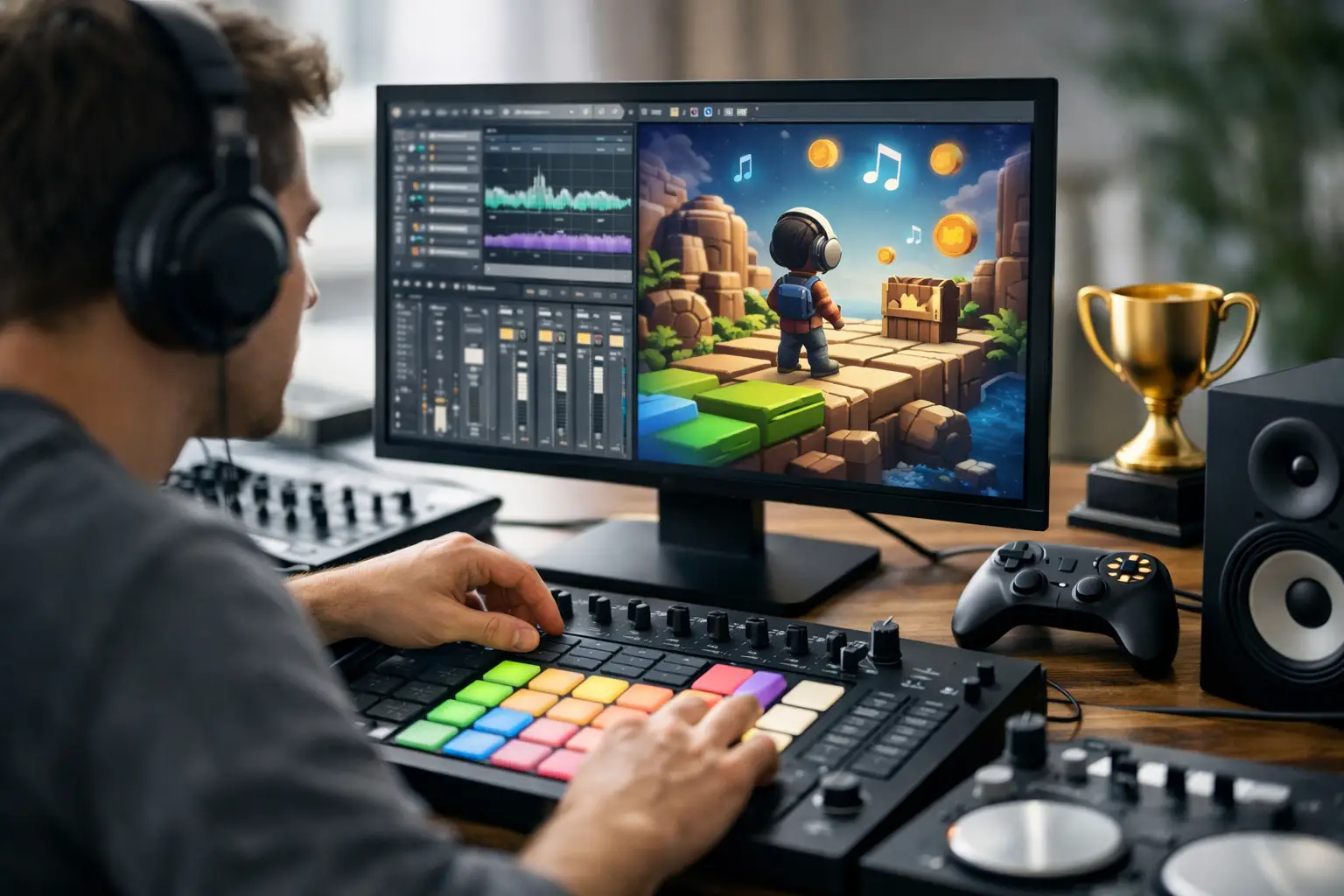
You can spend three hours watching mixing videos, save twelve tabs about sound design, and still end the night with the same half-finished loop. That is exactly why a gamified music production course hits differently. Instead of treating learning like endless content consumption, it turns your next skill into a clear quest, gives you something to do with it right away, and rewards you for showing up often enough to actually improve.
For beginner and intermediate producers, that shift matters more than people think. The problem usually is not a lack of information. It is too much information, not enough structure, and almost no feedback loop strong enough to keep momentum alive when the DAW starts feeling like a maze.
What makes a gamified music production course different?
A normal online course often works like a video library. You press play, take in some theory, maybe copy the move once, and then move on. It can be useful, but it also makes it easy to confuse recognition with mastery. Seeing someone EQ a vocal is not the same as being able to hear muddiness in your own track and fix it fast.
A gamified music production course changes the frame. Instead of asking, "Did you watch the lesson?" it asks, "Did you complete the challenge? Did you pass the quiz? Can you repeat the skill under slightly different conditions?" That difference sounds small, but it is the line between passive learning and actual leveling up.
The game layer is not there just to make things cute. XP, achievements, streaks, progression maps, and boss battles work because they create visible movement. Music production is full of long stretches where your ears are improving before your confidence catches up. If you cannot see progress, it is easy to think none is happening. A smart progression system gives your brain receipts.
Why producers quit ordinary courses
Most producers do not drop off because they are lazy. They drop off because the path is fuzzy.
One week they are learning compression. The next they are watching a random video about mastering chains. Then they jump into a Serum patch tutorial, then a beat breakdown, then a shortcut video for a DAW they do not even use. It feels productive because it is music content, but it often creates a side quest spiral instead of a skill tree.
That is where gamification earns its keep. It organizes the chaos. You are not wandering through a giant tutorial dungeon hoping to find the right loot. You are moving through a path with a clear next objective. Learn this. Practice this. Prove this. Then advance.
There is also the motivation problem. Music production has a brutal middle zone where you know enough to hear your mistakes but not enough to fix them quickly. That stage can wreck consistency. A well-designed system makes that grind less random and more rewarding. Daily challenges, recap quests, and milestone achievements give you reasons to log in even on days when inspiration is low.
The real advantage is retention, not entertainment
A lot of people hear the word gamified and assume it means flashy. Points. Badges. Confetti. Maybe a few cartoonish animations and a leaderboard. If that is all it is, the effect wears off fast.
The best gamified systems are not built around decoration. They are built around repetition, recall, and application. In music production, that means you should not just learn what a transient is once. You should identify it, adjust it, hear the result, get tested on it later, and use it again in a fresh context.
That is why challenge-based learning sticks. When you pair lessons with ear training, quick quizzes, software-specific exercises, and repeatable tasks, the knowledge moves from "I remember hearing that term" to "I can use this in a session without panicking." That is the jump that matters.
This is especially useful in DAW learning. Every producer knows the pain of watching a general tutorial that does not match the software on your screen. The concept may be right, but the workflow friction kills your momentum. A stronger format gives you DAW-specific paths, so the lesson and the action live in the same world.
How a gamified music production course builds momentum
Momentum is one of the most underrated skills in creative work. Not talent. Not gear. Momentum.
When a course is built like a game, it lowers the startup cost of practice. You do not have to figure out what to work on every time you sit down. The next mission is already there. Maybe it is a rhythm challenge in Ableton. Maybe it is an EQ identification drill. Maybe it is a boss battle where you have to apply several concepts in one practical test. The key is that you are never starting from a blank screen.
That structure helps newer producers most, but intermediate learners benefit too. Once you are past the basics, inconsistency becomes the bigger enemy. You can know enough to make decent music and still stall out for months because your practice is random. Systems that break learning into bite-sized objectives keep your sessions focused and your confidence less tied to whether you made an amazing track that day.
That is also where AI guidance can help, if it is used well. The best version of AI in education does not replace your ears or your creative decisions. It acts more like an oracle in the dungeon - pointing you toward the next useful step, clarifying confusion, and helping you recover when you get stuck. Used poorly, AI can flood you with generic advice. Used well, it shortens dead ends.
Not every gamified course is good
This part matters. Gamification can absolutely improve music learning, but only if the curriculum underneath it is strong.
If the lessons are shallow, game mechanics just put armor on weak content. If the rewards are disconnected from skill, you end up collecting badges without building better habits. And if the system is too focused on streak pressure, it can make missing a day feel like failure instead of part of real life.
A good course balances motivation with mastery. It should feel fun, yes, but the fun needs to come from progress. That means the challenge level has to be right. Too easy, and it feels fake. Too hard, and the game turns into punishment. The sweet spot is a sequence of wins that stretch your ability without overwhelming it.
That is why software-specific learning, structured progression, and practical reinforcement matter so much. The fantasy wrapper is great. The galaxy map is cool. The achievements feel good. But the core question is simple: after a few weeks, are you better at finishing beats, hearing mix problems, building sounds, and moving around your DAW faster? If the answer is no, the game is not doing its job.
Who benefits most from this format
If you are the kind of producer who saves tutorials faster than you finish tracks, this format makes a lot of sense. If you get overwhelmed by too many options, need a visible sense of progress, or learn best by doing rather than watching, it makes even more sense.
It is especially strong for bedroom producers who want consistency but do not want school vibes. A gamified path can make technical topics like gain staging, synthesis, ear training, and arrangement feel far less intimidating. You are still learning serious material, but the experience is designed to keep you moving instead of making you feel like you are stuck in a lecture hall.
That said, it depends on your personality. Some advanced producers prefer total freedom and self-directed experimentation. If you already have strong habits, a clear workflow, and enough discipline to build your own curriculum, you may not need much external structure. But even then, targeted challenges and skill tests can reveal weak spots you would otherwise avoid.
For most learners in the beginner-to-intermediate range, though, the value is obvious. You get direction when you need it, repetition where it counts, and enough reward to make practice feel like progress instead of homework.
What to look for in a gamified course
The best platform will not just entertain you. It will give you a full loop: learn, apply, test, repeat.
Look for a course that teaches production fundamentals and your actual tools, not just broad concepts floating in space. Look for ear training and quizzes, because production is as much about hearing and decision-making as it is about clicking the right menu. Look for progression systems that track what you have done and what is next. And look for challenges that force recall, because that is where skills start to stick.
If a platform combines structured lessons, DAW paths, daily quests, and AI support inside one system, it can solve a huge problem that most producers have quietly accepted: the gap between watching and doing. SoundSurf is built around that exact gap, turning music learning into a skill-based adventure instead of a pile of disconnected videos.
A good course should leave you with fewer open tabs, fewer abandoned projects, and a much stronger sense of what your next move is. That is the real win.
Music production gets more fun when progress becomes visible. Once practice starts feeling like a series of winnable quests instead of a foggy grind, showing up gets easier - and that is when the real tracks begin.