
Production & Workflow
How to Stay Consistent Producing Music
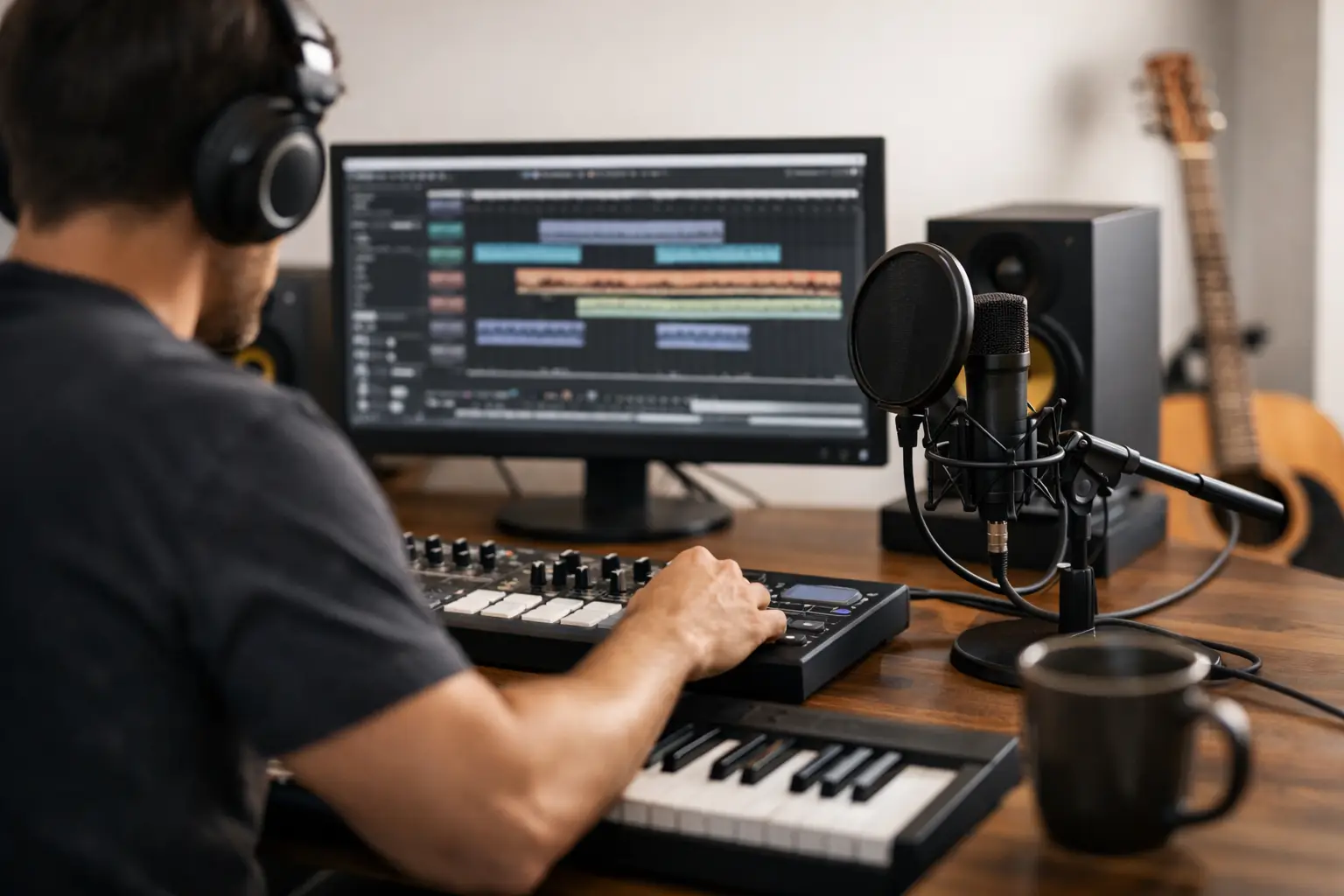
Some days you open your DAW, make a drum loop in ten minutes, and feel unstoppable. Other days you stare at the screen like it just assigned you a side quest you never accepted. If you’ve been wondering how to stay consistent producing music, the problem usually isn’t laziness. It’s friction, vague goals, and a workflow that asks your brain to do too much at once.
Most producers think consistency comes from motivation. It doesn’t. Motivation is a random loot drop. Nice when it appears, useless when you try to build a routine around it. Consistency comes from a system that still works when you’re tired, busy, distracted, or not feeling especially inspired.
Why consistency feels so hard in music production
Music production looks simple from the outside. Open a project, make music, finish a track. In reality, every session can become five different missions at once. You’re choosing sounds, fixing levels, learning your DAW, second-guessing your taste, and wondering whether the snare is bad or you just need sleep.
That mental overload is exactly why so many producers disappear into tutorial hell. Watching content feels productive because it keeps you near the craft without forcing decisions. But passive learning rarely builds the kind of muscle memory that makes showing up easier tomorrow.
There’s also the perfection trap. If every session needs to produce a finished song, your brain starts treating music like a boss battle every single day. That’s exhausting. A better approach is to separate practice, sketching, and finishing. They’re related, but they’re not the same quest.
How to stay consistent producing music without burning out
The first fix is smaller targets. Not smaller dreams - smaller daily wins.
A lot of people fail at consistency because their production sessions are too ambitious for normal life. If your plan is "produce for three hours every night," you’re designing for your best-case self. Your real routine should work on low-energy days too. Thirty focused minutes beats three imaginary hours every time.
Think in minimum viable sessions. Open the DAW. Build a drum groove. Recreate a bass patch. Arrange eight bars. Label your tracks and clean a rough mix. If that turns into a two-hour flow state, great. If not, you still protected the habit.
This is where game logic helps. You do not need to beat the whole dungeon every time you log in. Sometimes the win is clearing one room and grabbing the XP.
Build a practice system, not a mood-based routine
If your schedule depends on waiting until you feel creative, you’ll produce in bursts and disappear in between. Consistent producers reduce the number of decisions required before work starts.
That means choosing a regular time, a regular place, and a regular starting action. Maybe you sit down at 8:00 PM, put your phone face down, open the same template, and begin with drums. Maybe your morning session is strictly sound design. The exact ritual matters less than the repeatability.
Your starting action should be almost stupidly easy. Not "write a great hook." More like "open yesterday’s project and solo the drums." Starting is the hardest part. Once the project is open, resistance usually drops.
It also helps to assign different days to different modes. Monday can be idea generation. Tuesday can be arrangement. Wednesday can be ear training or sound design. That structure keeps you from expecting every session to do everything.
Stop measuring progress only by finished songs
Finished tracks matter, but they’re a terrible daily scoreboard.
If the only thing that counts is releasing music, you’ll feel behind most of the time because production is slow by nature. A better scorecard tracks actions you can control: sessions completed, loops built, transitions practiced, references analyzed, presets made, mixes revised.
This matters because consistency is easier when progress is visible. You want proof that the grind is working even before the Spotify-ready results show up. Think like a player leveling a character. You don’t gain all your stats at the final boss. You gain them through repeated reps.
One smart move is to keep a production log. Nothing fancy. Just write down the date, what you worked on, and one thing you improved. After a few weeks, you stop feeling like you’re "doing nothing" because the receipts are right there.
Make your environment easier than your excuses
A messy setup creates hidden resistance. If your MIDI keyboard is unplugged, your headphones are buried, your sample folders are chaos, and every session starts with tech support, your brain learns that producing is annoying before it learns that producing is fun.
Clean up the path. Save templates for your DAW. Create a few go-to drum kits. Organize your top sounds. Keep one folder for works in progress and one for finished exports. Remove the tiny annoyances that turn a quick session into a delayed one.
This doesn’t mean becoming obsessive about organization. There’s a trade-off. Some producers spend so much time polishing templates and color-coding tracks that they avoid actual music-making. The goal is functional, not perfect.
Use constraints to beat overwhelm
When you have unlimited sounds, unlimited plugins, and unlimited directions, consistency takes a hit. Too many options drain momentum.
Constraints solve that fast. Limit yourself to one synth for a week. Build a beat from stock plugins only. Make a sketch using eight tracks max. Finish a 60-second idea before starting another. Restrictions turn an open-world chaos map into a clear mission.
This is especially useful for beginners and intermediate producers who are still building instincts. Freedom sounds exciting, but structure is what creates repeatable progress. The producers who improve fastest are usually not the ones doing the most. They’re the ones repeating the right kind of work.
Protect the habit during low-motivation weeks
You will have off weeks. School gets heavy. Work gets weird. Life lands a crit hit. The mistake is assuming consistency means performing at full power all the time.
Real consistency is staying in the game when your energy drops. On those weeks, lower the difficulty without quitting the campaign. Do a 15-minute session. Complete one ear training drill. Rebuild a favorite chord progression. Tweak one mix and bounce it. Tiny sessions keep the chain alive.
This is where a challenge-based approach works better than a vague creative promise. Specific tasks are easier to start than open-ended art time. "Make a four-bar drum pattern in 10 minutes" is concrete. "Be creative tonight" is not.
If you use a platform like SoundSurf, this is exactly where structure can carry you. Daily challenges, guided paths, and visible progress mechanics turn practice from a giant abstract goal into a series of clear wins. That matters more than people think.
Don’t confuse boredom with failure
At some point, repetition stops feeling exciting. That’s normal. Skills grow through reps, not constant novelty.
A lot of producers quit right before things click because practice starts to feel less magical and more mechanical. But that mechanical phase is where your timing improves, your sound choices get faster, and your ear starts noticing problems earlier. It’s not glamorous. It is effective.
The trick is to keep enough variety to stay engaged without resetting your whole system every week. You can rotate genres, project types, or lesson formats while keeping the same schedule. New mission, same habit loop.
Build a system for finishing, not just starting
Starting projects is fun. Finishing them is where many producers wipe.
If you want to stay consistent long term, you need a finish line process. Otherwise your hard drive turns into a graveyard of promising intros. Set a rule for which ideas deserve expansion. For example, only arrange the sketches you still like after 24 hours. That prevents you from dragging every random loop through a full production cycle.
Then simplify the finishing stages. Arrange first, sound polish second, mix third. Don’t try to perfect your master while the second verse doesn’t exist yet. When stages blur together, tracks stall out.
It also helps to define what "done" means for your current level. For a beginner, done might mean a full arrangement with basic levels and transitions. That counts. If you keep moving the goalposts to commercial perfection, you’ll train yourself to abandon more than you complete.
The real secret is identity
The producers who stay consistent usually stop negotiating with themselves. They stop asking, "Do I feel inspired enough to make music today?" and start acting like the kind of person who practices because that’s just what they do.
That identity shift is powerful because it changes the question. Not "Will I make something amazing tonight?" but "What’s today’s rep?" Once your job is simply to show up and earn the XP, the pressure drops and the habit gets stronger.
You do not need a perfect routine, perfect focus, or perfect output to keep progressing. You need a system that survives ordinary life, a clear next action, and enough patience to let small sessions stack. Keep clearing rooms. The boss battles get easier when your stats are real.